

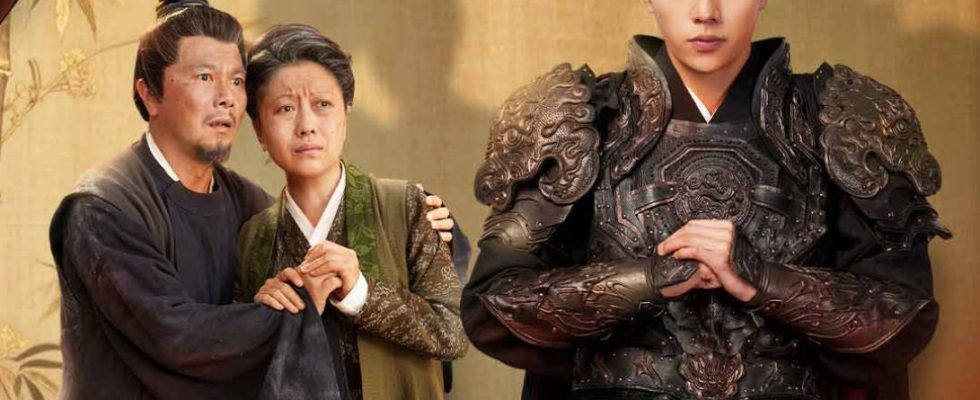
Attention, drama lovers! Prepare for an emotional journey that will leave you spellbound. The Return: A Dramatic Family Saga is more than just a historical drama; it’s a gripping exploration of lost connections, family ties, and romance. This ReelShort series delves into social hierarchies, focusing on a mother-son bond that withstands the test of time. Its multi-layered storytelling and character depth are perfect for viewers who appreciate intricate narratives that intertwine personal and historical challenges.
Advertisements
In technical terms, The Return: A Dramatic Family Saga marks a significant evolution in short-form dramatic storytelling. Utilizing the innovative ReelShort format, the series presents tightly woven episodes that maintain strong narrative momentum. Each episode is crafted with exceptional period-accurate design, immersing viewers in a vividly realized historical context. The cinematography captures both heartfelt family interactions and expansive historical settings, creating a visual experience that balances intimacy with scale.
The series effectively highlights themes of family reunion, social mobility, and the transformative impact of recognition. Identity is a key theme, illuminating how interpersonal bonds can break through social barriers. The drama skillfully explores concepts of belonging, showing how characters navigate intricate familial and societal pressures. Unique to The Return is its thoughtful character development, showcasing complex individuals whose motivations go beyond simplistic notions of good and evil.
Initial Separation and Reunion (200-250 words)
The narrative begins with an emotional scene at a lively fair, where young Elijah becomes separated from his mother, Sabrina. This pivotal moment shapes their lives for the next fifteen years, creating an intricate emotional landscape where recognition becomes both a joy and a burden. Elijah, now a Duke and raised by General Hale Gibson, navigates high society, unknowingly crossing paths with his biological family time and again without full awareness.
As the story develops, tension rises with each nearly missed encounter and cleverly crafted dramatic irony. Elijah’s quest to uncover his true origins serves as both a literal and metaphorical journey, with each meeting unveiling layers of family history and societal intricacies. The plot deftly balances personal dramas with larger historical contexts, reflecting how individual tales are intertwined with broader social changes. Viewers will feel both frustrated and intrigued by the complex interplay of recognition and ambiguity that marks Elijah and Sabrina’s relationship.
Elijah Morton: Identity and Belonging (150-200 words)
Elijah Morton’s character provides a profound exploration of identity and belonging. Though raised in privilege, he remains deeply disconnected from his origins, showing the tension between societal expectations and inner truth. His character arc is rich, depicting a young nobleman balancing court politics while yearning for familial ties.
Elijah’s appeal lies in his mix of privilege and emotional depth. Despite his status, he is driven by a sincere desire to understand his heritage. His experiences reveal a multi-faceted individual who leverages his social standing not for self-promotion, but to reconnect with and safeguard his birth family.
Sabrina Lester: Maternal Strength (150-200 words)
Sabrina Lester stands as the narrative’s emotional anchor, showcasing remarkable maternal strength. Despite working as a servant and enduring the pain of separation, she symbolizes the resilience of marginalized women navigating tough social conditions. Her character refuses to be defined by adversity, holding onto hope and dignity during years apart.
Her approach to reconnection is subtle and measured, reflecting both maternal instinct and intelligence. Each interaction aimed at connecting with her son is thoughtful, highlighting her depth. Sabrina emerges as a powerful representation of a mother’s love that overcomes societal restrictions and personal struggles.
Exploring Reunion Dynamics (150-180 words)
The series captures profound emotions in its examination of reunion dynamics. These moments go beyond mere plot developments, transforming into deep philosophical inquiries into recognition, belonging, and love. The creators skillfully convey that genuine emotional reunion encompasses more than just physical closeness; it demands mutual comprehension and healing.
Notably impactful are scenes where social facades and true feelings clash. Potential moments of recognition are tense, with every glance and movement steeped in emotion. The series cleverly employs visual and performative cues to depict the complex psychology of long-separated family members, providing an intellectually stimulating yet emotionally rich viewing experience.
Success on ReelShort Platform (120-150 words)
The Return: A Dramatic Family Saga has found a fitting home on ReelShort, where its impactful storytelling aligns perfectly with modern audience preferences. The series represents a fresh era in narrative art, valuing depth over duration and offering a robust viewing experience in succinct episodes.
Its success highlights a rising demand for layered, character-focused historical dramas that defy conventional storytelling. By integrating personal stories with broader societal themes, the series appeals to viewers looking for substance beyond surface-level entertainment.
A Compelling Narrative Journey (100-120 words)
The Return: A Dramatic Family Saga goes beyond traditional storytelling, offering a deep reflection on love, social mobility, and human connection. It demonstrates that emotional depth comes not from grand events, but from insightful, authentic narratives that reveal the complexities of human experience. For those in search of a drama that challenges, resonates, and enriches their understanding of family and identity, this series is an essential watch. It’s not just entertainment; it’s a profound exploration of the enduring power of love.