
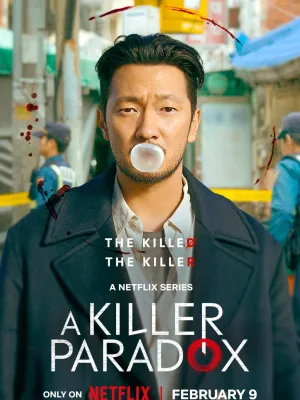
Hello! Today, I’m reviewing A Killer Paradox, a standout K-drama on Netflix for 2024. This psychological thriller presents a gripping story where a college student becomes an unexpected vigilante after a tragic accident.
Advertisements
A Killer Paradox debuted on February 9, 2024, comprising 8 episodes, each around 60 minutes long. Directed by Lee Chang-hee, known for Hell Is Other People and The Villainess, and scripted by Kim Da-min, it is adapted from the Naver webtoon Sarinjaonnangam by Kkomabi. The series is a darkly humorous morality tale, challenging views on justice, fate, and the fine line between heroism and crime.
The narrative centers on Lee Tang, an ordinary college student who works part-time at a convenience store. His life shifts dramatically after he accidentally kills a man during a confrontation. What differentiates A Killer Paradox from typical crime dramas is its deep dive into moral ambiguity and the idea of justified killing. The show pushes viewers to evaluate their own moral beliefs as Lee uncovers a peculiar skill for identifying truly evil individuals.
Lee Tang’s Transformation: From Student to Vigilante
The story kicks off with Lee Tang (Choi Woo-shik) facing off against a troublesome customer during his night shift. In a fit of anger, he accidentally takes the man’s life with a hammer. However, the plot quickly reveals that this victim was a serial killer, which establishes the main moral conflict of the series.
As Lee Tang deals with his actions, he starts noticing a pattern: those who provoke his violent urges often turn out to be criminals. This unsettling realization leads him to believe he possesses a unique ability to spot evil. The series expertly blends dark humor with psychological tension as Lee evolves from an aimless student into a self-styled agent of justice.
Choi Woo-shik’s Lee Tang: The Unwilling Anti-Hero
Choi Woo-shik’s performance as Lee Tang is remarkable, showcasing his talent beyond his role in Parasite. He compellingly portrays a young man spiraling into vigilante actions, raising questions about his morality. A Killer Paradox lets him delve into the psychological intricacies of someone convinced they are doing good while committing horrific acts.
Throughout the series, viewers witness Lee Tang’s transformation from a lost college student to a man who believes he is destined to eradicate evil. Choi Woo-shik captures the internal conflict between his growing belief in his mission and the doubt about becoming the very thing he fights against. His performance elicits both empathy and fear, creating a complex viewing experience that highlights the show’s excellent writing.
Son Suk-ku as Detective Jang Nan-gam: The Unyielding Hunter
Son Suk-ku portrays Detective Jang Nan-gam with intensity and sharp intelligence. His character is both Lee Tang’s adversary and the moral compass of A Killer Paradox, embodying traditional justice. The tension between Detective Jang and Lee Tang is a driving force of the story.
What stands out in Son Suk-ku’s portrayal is his obsessive pursuit of Lee Tang, occasionally resorting to questionable tactics. The series examines how the quest for justice can corrupt even the most righteous, drawing a fascinating parallel between hunter and hunted. The chemistry between Son Suk-ku and Choi Woo-shik creates some of the most thrilling moments in recent K-drama.
Personal Justice: A Moral Crossroads
The series intensifies as Lee Tang’s actions begin to impact innocent lives, while Detective Jang’s investigation tightens. A Killer Paradox does not shy away from portraying the fallout of vigilante justice, confronting both characters and viewers with the real cost of taking the law into one’s own hands.
The pivotal moment arrives when Lee Tang must choose whether to persist in his mission, risking the lives of loved ones. Simultaneously, Detective Jang faces his own ethical dilemma about how far he will go to capture his target. These scenarios emphasize the series’ strength in presenting authentic moral complexity without easy resolutions.
The Ripple Effect of Choices
Lee Hee-joon and the supporting cast add depth to the moral complexity of A Killer Paradox. Characters, including Lee Tang’s coworkers and various police members, enhance the exploration of justice, guilt, and violence’s ramifications.
The series excels in illustrating how Lee Tang’s choices reverberate, impacting not just direct victims but all connected to them. Supporting characters reflect potential paths Lee could have taken, showcasing responses to trauma that do not involve violence.
Netflix Success: Acclaim and Debate
A Killer Paradox has gained considerable attention on Netflix, achieving a rare 100% critic score on Rotten Tomatoes with an average rating of 7.2/10. Critics commend the series for avoiding simplistic moral conclusions, although some viewers find its themes challenging. The eight-hour-long format allows for extensive character development while maintaining the psychological tension that captivates viewers. A Killer Paradox is hailed as one of Netflix’s best, highlighting Choi Woo-shik’s range and the show’s unique take on vigilante narratives.
A Thought-Provoking Journey into Morality
If you enjoy psychological thrillers that provoke thought and challenge your moral beliefs, A Killer Paradox is a must-watch on Netflix. It transcends mere entertainment, offering a deep dive into what happens when everyday individuals take justice into their own hands.
Why You Should Watch This Unique Series
A Killer Paradox succeeds by refusing to glamorize vigilante justice while recognizing the frustrations that lead people to it. The series encourages viewers to reflect on their views regarding justice, punishment, and whether ends ever justify means. It’s a conversation starter that lingers long after viewing, prompting questions about both the characters’ actions and the essence of justice itself.
Series Overview
Episodes: 8 (Complete Season)
Available On: Netflix
Year Released: 2024
IMDb Rating: 7.8/10
Genre: Psychological Thriller, Crime Drama, Dark Comedy
Status: Season 1 Complete (Potential for future seasons)
Main Characters: Choi Woo-shik (Lee Tang), Son Suk-ku (Detective Jang Nan-gam)
Antagonist: The moral ambiguity of vigilante justice