
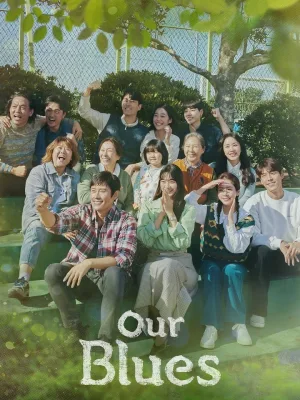
Hello, everyone! How’s everything? Today, I’m excited to share my thoughts on the drama Our Blues, which has enchanted viewers around the globe with its stunning depiction of community life on Netflix.
Advertisements
This ensemble slice-of-life drama debuted in April 2022, comprising 20 episodes that run for about 80 minutes each on Netflix. Set against the backdrop of the beautiful Jeju Island, the series intricately weaves together various interconnected narratives that delve into the intricacies of human relationships, family dynamics, and personal development. Unlike conventional K-dramas that focus on a singular romantic plot, Our Blues offers an anthology-style narrative featuring the diverse residents of a small island community as they face life’s challenges and celebrate their victories.
The drama distinguishes itself with its authentic representation of everyday individuals encountering remarkable situations, crafting a rich mosaic of human experiences that resonates with audiences from diverse backgrounds. Each episode shifts its focus among different characters while preserving the central themes of resilience, forgiveness, and the significance of community support.
Many Lives, One Community
The narrative unfolds through several interwoven stories revolving around the inhabitants of Jeju Island. Central to these plots are Lee Dong-seok, a former soccer player who has become a truck driver, and Min Sun-ah, a successful woman returning to her hometown laden with secrets from her past. Their rekindled romance is one of the key threads linking the various narratives.
Additional significant storylines include the youthful romance between Park Jung-jun and Choi Han-su, teenage sweethearts grappling with an unexpected pregnancy; the journey of Bang Ho-sik and Lee Yeong-ju, middle-aged individuals rediscovering love later in life; and the complicated relationship between Ok Dong-seok and his daughter as they confront past wounds and misunderstandings. Each narrative explores different phases of life and love, from teenage affection to companionship in old age.
Lee Dong-seok and Min Sun-ah: Second Chances in Love
Dong-seok embodies the everyman who has faced both triumph and defeat, learning to find joy in the simplicity of island living. His character development delves into themes of redemption and second chances, as he rebuilds his life after his soccer career was cut short by an injury. His bond with Sun-ah becomes a pivotal force for addressing his past regrets and rediscovering his capacity to love.
Sun-ah represents the accomplished city woman returning home to confront unresolved challenges from her past. Her journey involves dealing with familial trauma, societal pressures, and her own anxieties about being vulnerable. The chemistry between these two characters fosters a mature romance that feels genuine and rooted in real emotional growth rather than extravagant actions.
Park Jung-jun and Choi Han-su: The Trials of Young Love
The teenage narrative offers some of the drama’s most emotionally intense moments, as Jung-jun and Han-su grapple with an unexpected pregnancy that compels them to mature rapidly. Their story addresses themes of accountability, familial pressure, and the burden of choices that will shape their futures.
These young characters symbolize hope and resilience, illustrating how love can endure even the most challenging circumstances when supported by understanding families and communities. Their transition from carefree teens to young adults facing genuine consequences creates some of the series’ most impactful emotional scenes.
When All Narratives Unite
The series reaches its emotional zenith in episodes that intertwine all storylines during communal crises and celebrations. These moments of convergence reveal how individual struggles impact the entire community and how collective support can help individuals overcome their darkest times. The climax episodes elucidate the true essence of belonging and how home is defined not just by a place but by the people who stand by you.
The resolution of each narrative feels earned and genuine, steering clear of tidy Hollywood endings in favor of realistic conclusions that acknowledge both progress and ongoing hurdles. The series effectively conveys that life goes on beyond dramatic events, and healing is an enduring journey rather than a final destination.
The Pulse of Community
The extensive supporting cast adds depth and authenticity to the island atmosphere, with each character enhancing the overall tapestry of community life. From local shopkeepers to elderly residents with their own love stories, every character feels integral to the world the series constructs.
The series excels in showcasing different generations coexisting and learning from one another, demonstrating how wisdom flows between age groups and how each generation faces universal human challenges in their unique ways.
A Netflix Hit
Our Blues garnered considerable success on Netflix by providing viewers with something distinct from the usual K-drama offerings. International audiences were captivated by its authentic depiction of Korean island life, its mature treatment of complex themes, and its ensemble cast featuring beloved actors such as Lee Byung-hun, Shin Min-a, and Kim Woo-bin. The series received acclaim for its cinematography highlighting Jeju Island’s natural beauty and its realistic approach to storytelling that avoids melodramatic clichés. Its anthology format allows viewers to engage with multiple narratives while experiencing the richness of community life.
If you enjoy character-driven dramas filled with genuine human stories and stunning landscapes, Our Blues is an ideal series to binge-watch on Netflix. A skillfully crafted drama that honors the beauty of ordinary life and demonstrates that the most impactful stories often emerge from the simplest human connections.
Série Details:
Número de Episódios: 20 episodes
Plataforma: Netflix
Avaliação: 8.9/10 IMDb
Gênero: Slice of Life, Romance, Family Drama
Protagonistas: Lee Byung-hun (Lee Dong-seok), Shin Min-a (Min Sun-ah), Kim Woo-bin (Park Jung-jun), Han Ji-min (Lee Yeong-ju)
Antagonista: Life circumstances/Personal struggles (no traditional villain)