

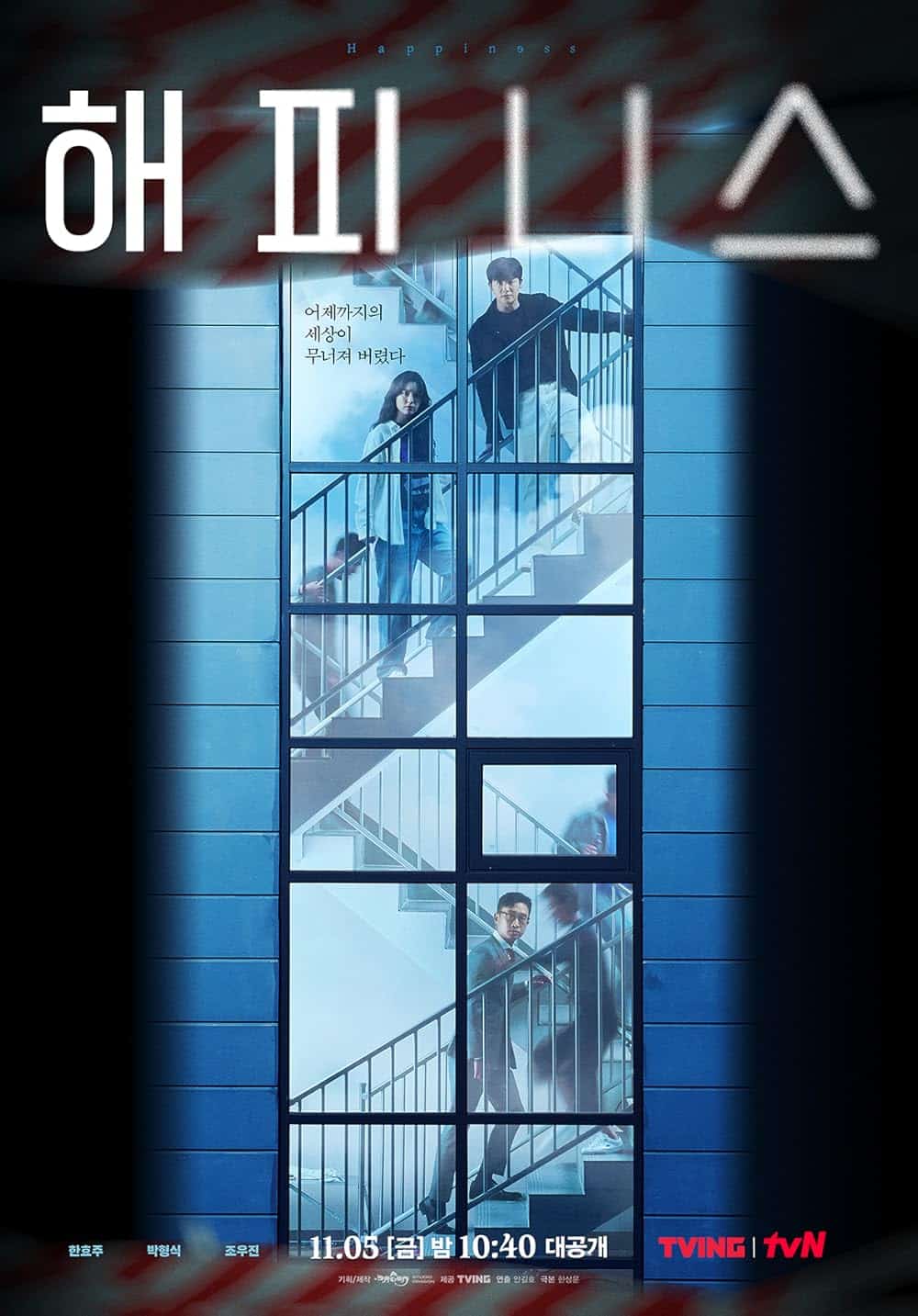
Hello, everyone! How’s everything? Today, I am excited to discuss the drama Happiness, which stands out as one of the most distinctive and socially aware zombie thrillers available on Netflix, merging horror with insightful critiques of contemporary society and class disparities.
Advertisements
Happiness debuted in November 2021 on tvN and subsequently became accessible on Netflix, consisting of 12 episodes, each averaging 65 minutes in length. This Korean drama was crafted by writer Han Sang-woon and directed by Ahn Gil-ho, both recognized for their contributions to critically acclaimed shows.
Set in a near-future Korea, this zombie thriller introduces a new drug named “Next,” which induces zombie-like symptoms, confining the inhabitants of an upscale apartment during a citywide lockdown. The series intertwines elements of horror, social satire, and romantic drama, utilizing the zombie apocalypse backdrop to delve into themes of class disparity, human nature, and societal collapse.
The show’s distinctive perspective prioritizes psychological tension and social dynamics over conventional zombie action, creating a stifling environment that reflects real-world fears surrounding pandemics, isolation, and the disintegration of community.
Human Nature During Pandemic Lockdown
Happiness revolves around Yoon Sae-bom and Jung Yi-hyun, two law enforcement officers who enter into a sham marriage to secure an apartment in a luxury complex. When a new synthetic substance called “Next” incites violent, zombie-like behavior among users, the entire city undergoes a lockdown, trapping the residents within their building.
As the outbreak spreads and resources dwindle, the residents of the apartment unveil their true selves, with class distinctions and personal biases surfacing. The series examines how crises strip away social pretenses, unveiling both the darker and brighter sides of human behavior.
Each episode reveals layers of the residents’ characters while intensifying the threat of the spreading infection, crafting a dual narrative that contrasts external zombie dangers with internal human monstrosities.
Sae-bom’s Unyielding Resolve
Han Hyo-joo delivers a stunning performance as Yoon Sae-bom, a former military officer turned police detective who has natural immunity to the zombie virus. Her character embodies resilience, loyalty, and moral bravery amidst overwhelming turmoil.
Sae-bom’s character transformation throughout the series reflects her growth from focusing solely on personal survival to becoming a leader committed to safeguarding the entire community. Her fierce determination and steadfast moral compass make her a captivating protagonist who remains unwavering in her values even when confronted with difficult decisions.
Yi-hyun’s Protective Affection
Park Hyung-sik plays Jung Yi-hyun, a police detective who has harbored feelings for Sae-bom since high school and becomes her fake spouse to aid her in securing the apartment. His character represents loyalty, sacrifice, and the strength of unconditional love during a crisis.
Yi-hyun’s character journey explores themes of protection, devotion, and moral ambiguity as he grapples with his responsibilities as a police officer and his desire to ensure Sae-bom’s safety. His relationship with Sae-bom serves as the emotional core of the series, illustrating how love can provide resilience during humanity’s bleakest moments.
Climactic Showdown: Humanity vs. Monsters
The series builds towards a pivotal confrontation where the apartment’s residents must choose between self-preservation and the survival of the community. This clash involves not only fending off zombie threats but also confronting the human monsters that emerge during the crisis.
The concluding episodes expertly balance action-packed sequences with emotional resolutions as characters confront the repercussions of their decisions throughout the lockdown. The climax questions whether humanity can rise above its baser instincts when faced with annihilation and if community ties can endure the ultimate tests.
The Community Within the Apartment
Happiness showcases a varied ensemble of apartment residents representing different segments of Korean society, ranging from affluent entitled families to struggling middle-class individuals. Characters like the self-serving lawyer Oh Ju-hyung and the privileged housewife Han Tae-seok act as antagonists whose classist views and selfishness instigate internal conflict.
These supporting characters effectively illustrate how crises reveal true character, with some rising to heroism while others succumb to selfishness and cruelty, creating a microcosm of society’s reaction to disaster.
Netflix Success Story
Happiness achieved international acclaim on Netflix for its intelligent take on the zombie genre, celebrated for utilizing horror elements to present incisive social commentary on class inequality and communal responsibility. The series received praise for its authentic portrayal of pandemic-like conditions and lockdown psychology, resonating with global viewers who faced similar experiences during COVID-19. The chemistry between Han Hyo-joo and Park Hyung-sik garnered widespread acclaim, with many viewing their relationship as one of the most genuine romantic partnerships in recent K-drama history. The show’s success illustrated that zombie thrillers can be both entertaining and intellectually stimulating, elevating the genre beyond mere horror into meaningful social dialogue.
If you’re a fan of zombie thrillers that offer profound social commentary and strong romantic elements, then Happiness is the ideal series to binge-watch on Netflix.
A brilliant fusion of horror and social satire that uses the zombie apocalypse to reveal the best and worst of human nature in times of crisis.
Series Overview:
- Episodes: 12
- Streaming Platform: Netflix (originally on tvN)
- IMDb Rating: 7.9/10
- Genres: Zombie Thriller, Social Drama, Romance, Horror
- Main Cast: Han Hyo-joo (Yoon Sae-bom), Park Hyung-sik (Jung Yi-hyun)
- Antagonists: The Next virus/infected zombies, self-centered residents like Oh Ju-hyung and Han Tae-seok who symbolize human greed and classism